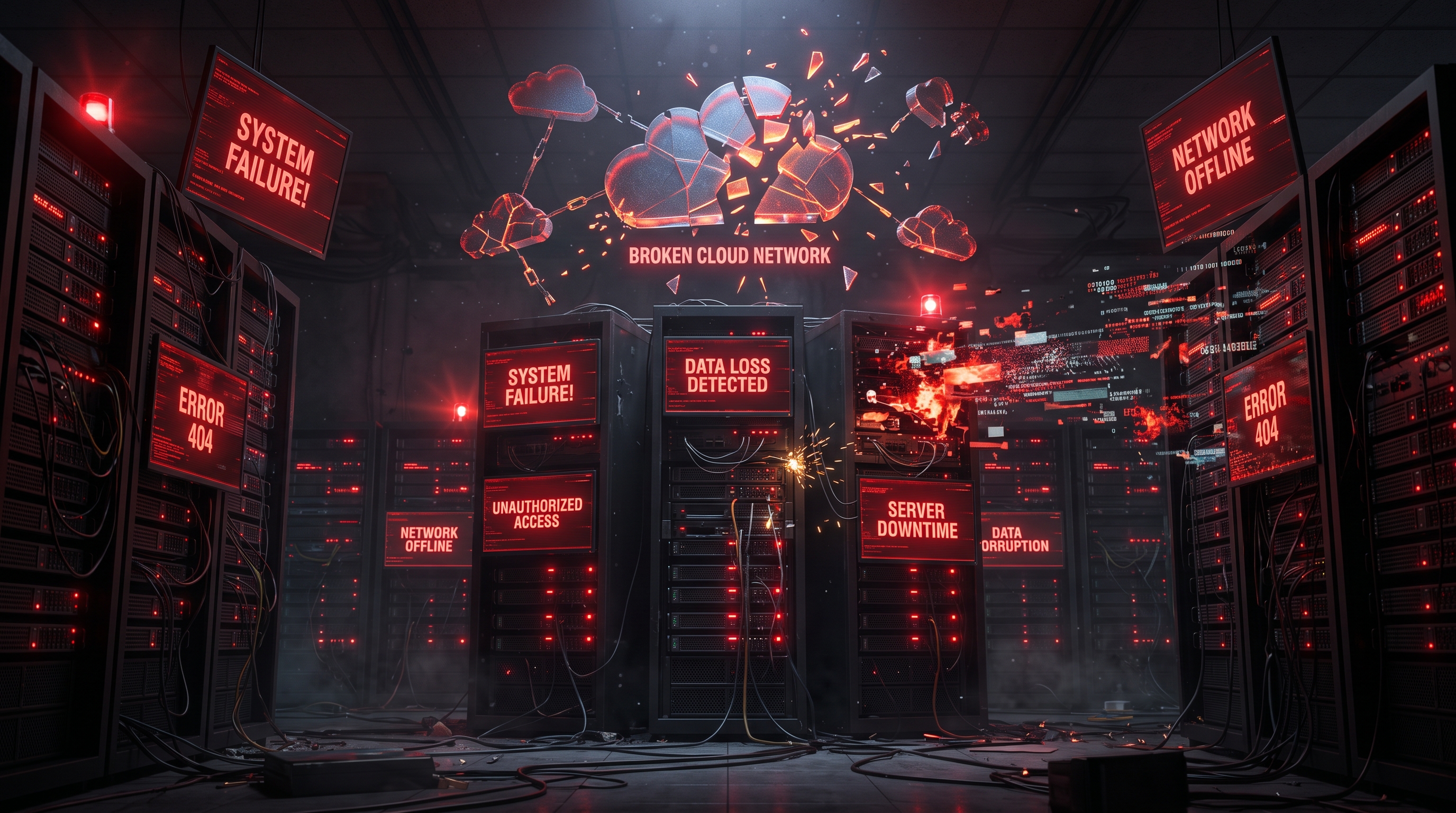
1. The Economic Mirage: How Companies Fall into the Shadow Cloud
The migration to unverified cloud infrastructure rarely originates in boardrooms; it starts with developer expediency and departmental cost-cutting. DevOps teams seeking temporary staging buckets or backup target repositories turn to unvetted offshore VPS aggregators or white-label hosting platforms.
Over time, data gravity takes over. Test datasets expand into staging volumes populated with live production database dumps. Before compliance teams are notified, regulated Personally Identifiable Information (PII), proprietary source code, and master encryption keys reside on physical servers managed by anonymous operators.
2. The Four Structural Failure Points of Unknown Hosts
1. Ghost Reseller Architecture
Over 65% of budget cloud brands own zero hardware. They operate as unmonitored resellers renting wholesale capacity, with no control over decommissioned disk wiping.
2. Zero Cryptographic Auditability
Absence of SOC 2 Type II or ISO 27001 attestations. Security claims are self-proclaimed marketing text without independent penetration validation.
3. Unenforceable SLA Constructs
SLA agreements that market "99.99% uptime" but legally cap liability at nominal service credits if an entire storage array is permanently wiped.
4. Sovereign Jurisdictional Voids
Entities incorporated behind offshore proxy shields, legally insulated from international civil discovery, GDPR mandates, or law enforcement cooperation.
3. Jurisdictional Black Holes & Regulatory Penalties
Data sovereignty is the foundational requirement of modern international data governance. When data is pushed to an unverified provider, physical control over data residency evaporates. Unverified operators dynamically route blocks to lower-cost data centers situated in regions with mandatory government data intercept laws or minimal privacy frameworks.
Under Article 28 of the GDPR, organizations are held strictly liable for the omissions and breaches of downstream processors. Storing customer databases on unvetted servers constitutes gross negligence. Regulatory fines reaching €20,000,000 or 4% of global annual turnover quickly obliterate any savings achieved through bargain cloud contracts.
4. Architectural Bleed: Side-Channel Exploits & Weak Isolation
Verified enterprise clouds utilize hardware-enforced isolation, micro-segmented virtual routing, and memory encryption (e.g., AMD SEV-SNP). In contrast, budget platforms maximize tenant density by disabling hardware security features that degrade CPU benchmarks.
Under shared L3 CPU caches, malicious neighbors can execute Rowhammer bit-flips or microarchitectural data sampling. Attackers can extract decryption tokens and active session variables straight out of RAM without leaving a single artifact in guest operating system audit logs.
5. The Ransomware Trap: The Fallacy of "Budget Backups"
Ransomware adversaries (e.g., LockBit, Akira) deliberately hunt secondary cloud storage repositories prior to initiating primary payload execution. When an enterprise relies on an unverified platform for offsite backup, the recovery repository invariably folds.
Unknown hosting providers frequently sell simple file versioning as "ransomware-proof immutability." Because the control plane relies on unified administrative credentials, adversaries compromise root tenant accounts and trigger immediate purging APIs across all snapshots simultaneously.
Enterprise Verification Matrix: Budget Hosts vs. Verified Infrastructure
| Evaluation Dimension |
Unverified / Unknown Cloud Hosts |
Trescosys Cloud Backup (Verified) |
| Encryption Model |
Server-side with vendor master keys; metadata stored unencrypted. |
Verified Zero-knowledge, client-held AES-256; keys never leave client site. |
| Immutability Security |
Software soft-delete; master control panel overrides all locks. |
Verified True hardware WORM locks; purges mathematically impossible during retention. |
| Audit Attestation |
None, or fabricated web badges linking to invalid domains. |
Verified Attested SOC 2 Type II, ISO 27001, HIPAA BAA, GDPR Article 28 certified. |
| Integrity Scrubbing |
None. Silent bit rot goes undetected until recovery crashes. |
Verified Continuous cryptographic ZFS parity checks and auto-remediation. |
| Restore Bandwidth |
Severely throttled on egress; recovery takes weeks. |
Verified Contractually guaranteed RTO/RPO; unmetered parallel restore streams. |
6. Silent Bit Rot: Cryptographic Atrophy in Cheap Storage
Storage media is vulnerable to physical degradation, electromagnetic decay, and controller faults known as silent bit rot. High-grade cloud repositories run continuous background scrubbing to validate blocks against cryptographic checksums. Unknown hosts use unscrubbed JBOD arrays; organizations only discover corruption during a catastrophic bare-metal restore when archive headers throw unrecoverable read errors.
7. Attack Kill Chain on Unverified Storage Environments
The vulnerability posture of unverified cloud providers introduces multi-stage kill chains that completely bypass conventional perimeter firewalls:
8. Colocation Evictions, Seizures, and "Rug-Pulls"
The operational viability of unknown hosting providers is notoriously fragile. Operating on thin cash margins, these companies regularly default on commercial colocation contracts or power invoices. When a wholesale data center landlord terminates a delinquent hosting tenant's lease, entire server rows are unceremoniously shut down and locked. Enterprise users wake up to find their systems dark and unreachable.
Even worse is the reality of physical law enforcement seizures. Because unvetted providers perform virtually zero "Know Your Customer" (KYC) screening, their physical hardware clusters attract cybercriminal syndicates, darknet nodes, and illegal operations. When federal authorities execute search-and-seizure warrants on a provider's rack, they seize physical storage enclosures. Lawful enterprise data hosted on the same physical disks becomes impounded evidence, inaccessible for months or years.
Cyber Insurance Coverage Invalidation
Modern cyber liability underwriters require explicit declarations regarding third-party supplier risk. If forensic investigators determine that recovery repositories were hosted on unverified systems lacking SOC 2 compliance, claims are routinely denied under gross negligence clauses.
9. The Standard of Trust: What Defines a "Verified" Cloud Provider?
A cloud platform cannot earn enterprise trust through low pricing or glossy marketing copy. Verification is an unyielding chain of mathematical, cryptographic, and audited legal standards:
- Client-Side Zero-Knowledge Encryption: Data blocks are encrypted on-premises prior to transmission using customer-held keys. The cloud provider mathematically cannot access plaintext contents.
- Hardware-Enforced Immutability: True Write-Once-Read-Many (WORM) storage locks that prevent snapshot alterations or deletions, even by authenticated root administrators.
- Third-Party Attestation: Verifiable SOC 2 Type II reports, ISO/IEC 27001 certifications, and formal Business Associate Agreements (BAAs) committing to absolute legal accountability.
- Contractually Enforceable SLAs: High-bandwidth, unthrottled restoration pipes backed by aggressive recovery point and recovery time objectives (RPO/RTO).
10. Verified Provider Spotlight: Trescosys Cloud Backup
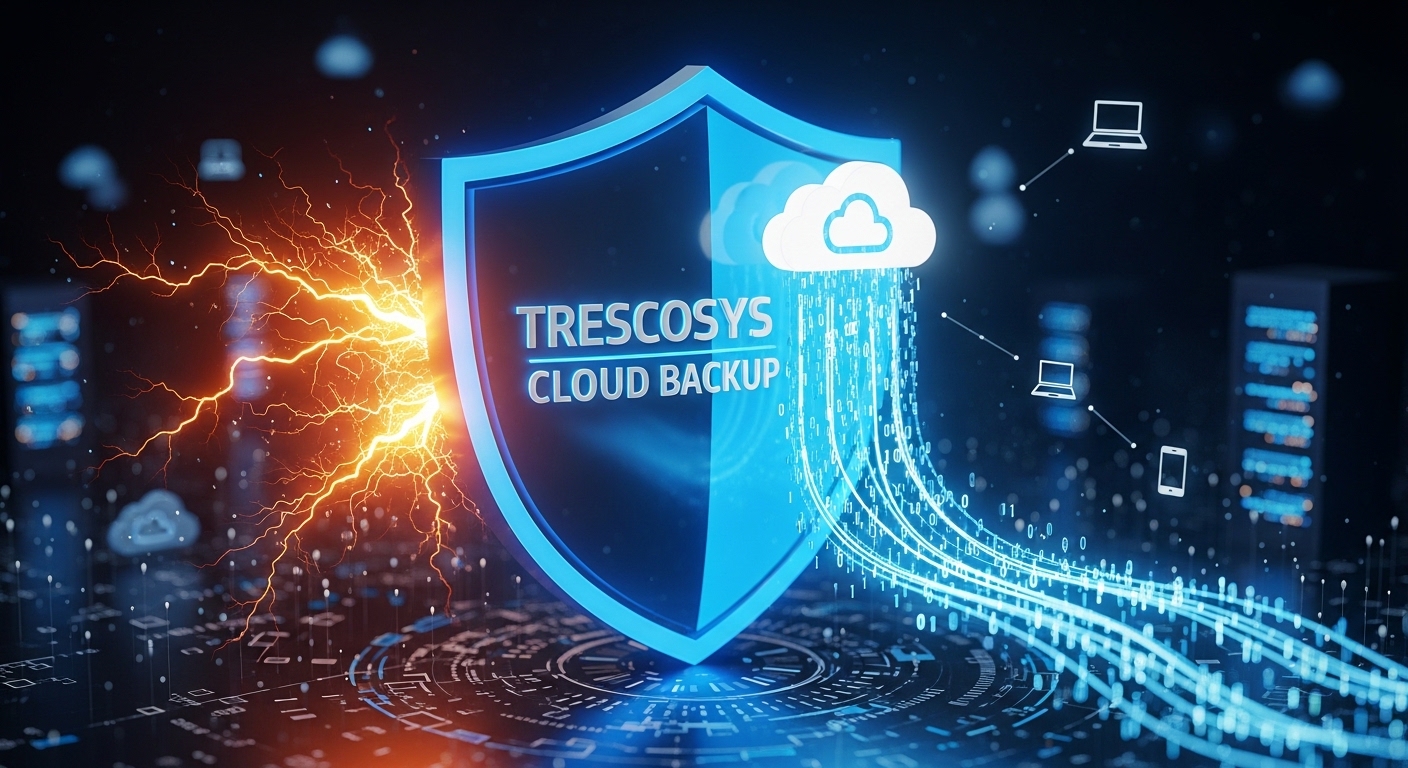
To overcome the existential vulnerabilities of unverified hosts, forward-looking enterprises rely on vetted platforms engineered from the ground up for zero-trust resilience. Trescosys Cloud Backup stands out as a verified enterprise-grade cloud provider, offering audited resilience against ransomware and data degradation.
With Trescosys Cloud Backup, client workloads are isolated behind zero-knowledge encryption barriers. Data is encrypted using AES-256-GCM before leaving the local hypervisor, guaranteeing that no rogue operator or neighboring tenant can access sensitive records. Within Trescosys immutable vaults, automated WORM locks protect backup sets against ransomware encryption, ensuring rapid and complete disaster recovery.
11. The 10-Point Cloud Provider Due Diligence Checklist
Before moving any production workload, secondary mirror, or backup snapshot to a cloud provider, security and procurement teams must evaluate the vendor against this 10-point framework:
1. Independent Attestation
Demand current SOC 2 Type II and ISO 27001 audit documents. Independently verify the issuing auditor's registration and validity.
2. Client-Managed Encryption (CMK)
Confirm client-side zero-knowledge encryption. The provider must never hold or manage private encryption keys.
3. True Hardware Immutability
Verify hardware WORM compliance. Ensure administrative master credentials cannot bypass retention locks.
4. Clear Sovereignty Guarantees
Contractually bind physical data center locations to allied jurisdictions to maintain GDPR, HIPAA, and NIS2 compliance.
5. Physical Data Center Audits
Confirm Tier-III+ facilities equipped with 24/7 biometric controls, video surveillance, and certified NIST 800-88 disk shredding.
6. Guaranteed Restore Bandwidth
Reject platforms that throttle outbound egress speeds during emergency restore drills. Test real-world RTO throughput regularly.
12. Migration Protocol: Safely Evacuating Unverified Platforms
Organizations with active footprints on unverified cloud hosts should execute a structured migration protocol:
- Immediate Secret Invalidation: Rotate every API key, database secret, SSH credential, and TLS certificate that has touched the unverified platform. Treat all credentials as compromised.
- Direct-Source Baseline Transfer: Deploy a verified platform like Trescosys Cloud Backup directly against source production workloads to establish clean baseline repositories rather than copying potentially compromised archives.
- Cryptographic Decommissioning: Trigger complete cryptographic erasure of legacy instances, terminate contracts in writing, and obtain signed certificates of media destruction.
Strategic Conclusion & Executive Mandate
In modern enterprise security, short-term infrastructure savings can never justify existential operational exposure. Unverified cloud platforms represent a systemic threat to regulatory compliance, data integrity, and business continuity. Standardizing on cryptographically attested, verified platforms like Trescosys Cloud Backup replaces liability with provable operational resilience.